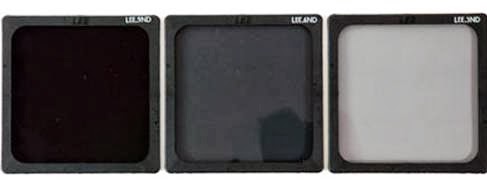
As we noted earlier, all filters absorb some amount of light. That is called the Filter Factor of the concerned filter. Cinematographers light up accordingly, keeping in mind a filter's filter factor, to keep the exposure as desired.
Sometimes cinematographers maintain the exposure by increasing the sensitivity of the film, and sometimes, though rarely, by opening the aperture.
Sometimes cinematographers maintain the exposure by increasing the sensitivity of the film, and sometimes, though rarely, by opening the aperture.
Before we can take up the major section of filters – Color Balancing, Color Compensation and Color Correction Filters, we must know a little about different colors of light.
Theoretically, any light that can be dispersed through a prism to show a continuous, full spectrum of all colors is white.
In reality, light from a candle, from a household bulb, from the studio solar or sunlight look different to the human eye.
That is because the proportions of pure wavelengths differ among these white lights.
While human eye can psychologically adjust to the changing color of the white light, camera cannot do so. Hence, a neutrally balanced camera is likely to see a white surface as the color of the predominant wavelength in the white light.
Human eyes are more sensitive to the green component of white light, and hence an almost proportionate measure of Red, Green and Blue blocks in the spectrum look white to the human eye.
However, if we see a white paper under candle light, we may not be deceived to think that the paper is of yellow-orange color itself. Human mind corrects the biased information.
If the camera sees the same white paper under the same candle light, it cannot make such an adjustment on its own.
It has to be told which color is predominant in the light, so that the camera lowers its sensitivity to that wavelength in the white light.
It has to be told which color is predominant in the light, so that the camera lowers its sensitivity to that wavelength in the white light.
Color conversion, color balancing, color compensation or color correction filters filter one or more wavelengths of any light. That changes the color of the light in effect.
Color Compensating Filters
These filters absorb one or more wavelengths selectively, thus passing a major color of light. Normally, color compensating filters are made in six major colors (three primaries and three secondaries for light) – Red, Green, Blue and Cyan, Magenta and Yellow.
As these filters bring some change to the Red, green and blue charactertistics of light.
They are used on camera, on light source to change one color tinged white light to neutral, or to another color, for batch processing of color reversal films, and for any other color effect.
They are used on camera, on light source to change one color tinged white light to neutral, or to another color, for batch processing of color reversal films, and for any other color effect.

A Yellow CC filter of density 20 cuts excess blue-violet
CC filters are available in different densities to control the saturation of a particular light color.
Each color filter absorbs its opposite color almost entirely, and also wavelengths close to that color.
Yellow filter cuts out blue-violet partially or entirely depending on the density of the filter. They change the tonality of sky and predominant sky reflection much more, compared to the rest of the frame, thus making interesting modifications to the clouds.
As this concerns tonality (that is the relative brightness) in the image, more than color, the effect becomes shows up more dramatically in a black & White version.

color compensating filter put on camera lens tends to desaturate a similar color object. In effect, a red ball seen through a red filter looks pale red.


In the images above, it can be clearly seen how the colors in the book change in relation to one another, when looked through a red filter.
Seen through a Roscosun double CTO Cinegel (in common words a strong yellow-orange dyed plastic), two different colors merge.
Seen through a Roscosun double CTO Cinegel (in common words a strong yellow-orange dyed plastic), two different colors merge.
Color on an object surface desaturates in the same manner when the same color light falls on that.
A light can be colored by putting color gelatin materials on the source itself. These gelatin materials are also called filters.
Light filters are less dense than optical filters (ie, filters put on the camera lens) for similar effect.
Light filters are less dense than optical filters (ie, filters put on the camera lens) for similar effect.
As said earlier, such filters are available in three primary colors of light – red, blue and green, and three secondary colors – cyan, magenta and yellow.
Companies such as Kodak, Tiffen, Hoya, Marumi, Nisi and Kenko make glass filters to be used on the camera lens.

Companies like Rosco, Lee and Gamcolor specialize in making filters to be put on light – theatrical and projection filters.